Loading
Guide
See the whole Korean learning map. Choose what fits you.
Compare what each course teaches and who it suits. There is no single required order.
COURSE MAP
Find the course that fits you
MAP 01
Beginner
LV1–4
01
Hangul & foundations
From Hangul to your first short sentences
- Read Hangul with confidence
- Use high-frequency verbs in everyday lines
- Grow core vocabulary a little every day
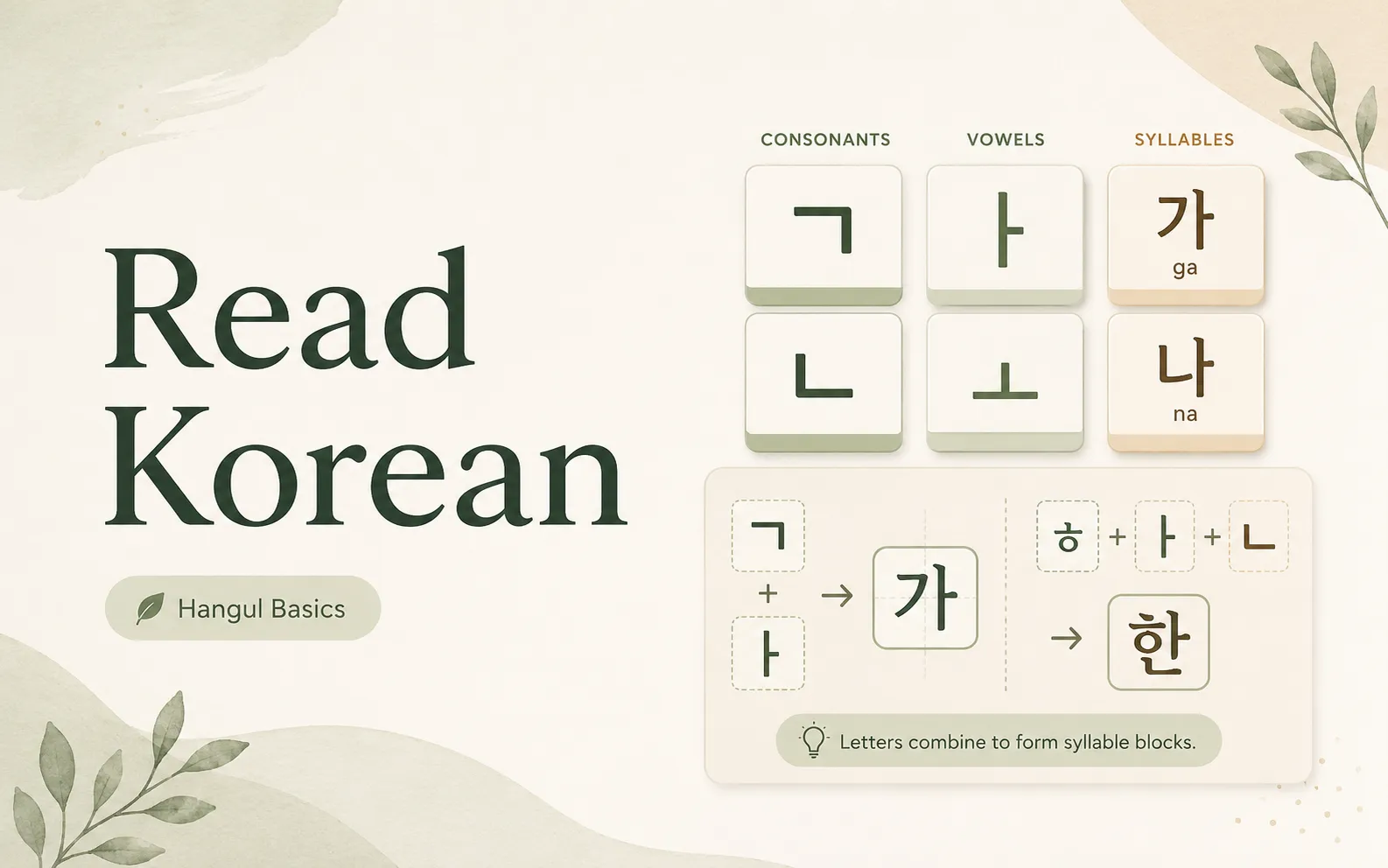
LV1
Read Korean
See how Hangul works, from consonants and vowels to batchim and real words. By the end, you can sound out Korean on your own.
Learning to read Hangul for the first time
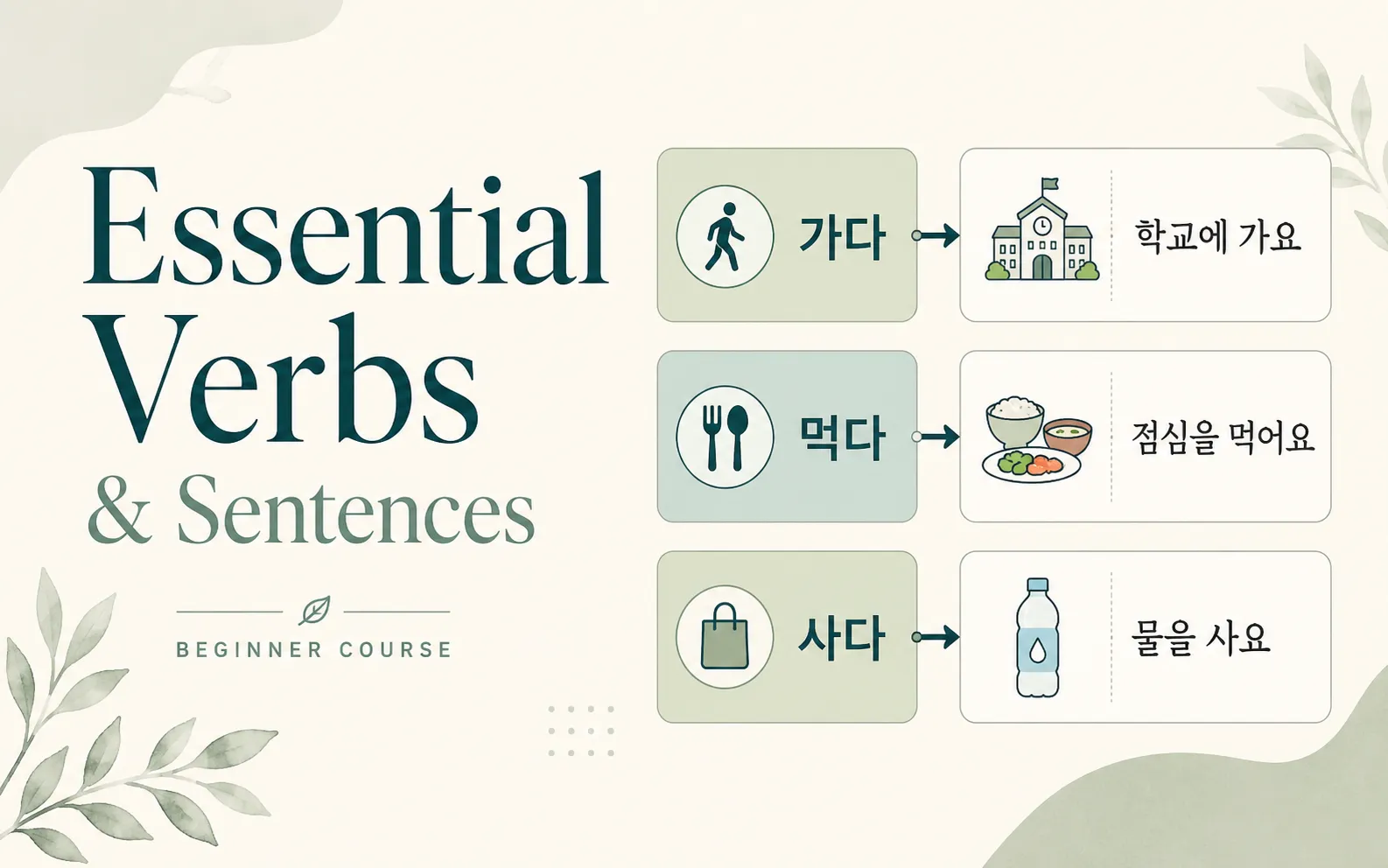
LV2
Essetial Korean Verbs & Sentences
Learn the verbs behind everyday actions—going, eating, meeting, calling, shopping—and reuse them in practical sentence frames.
Building short sentences and essential vocabulary
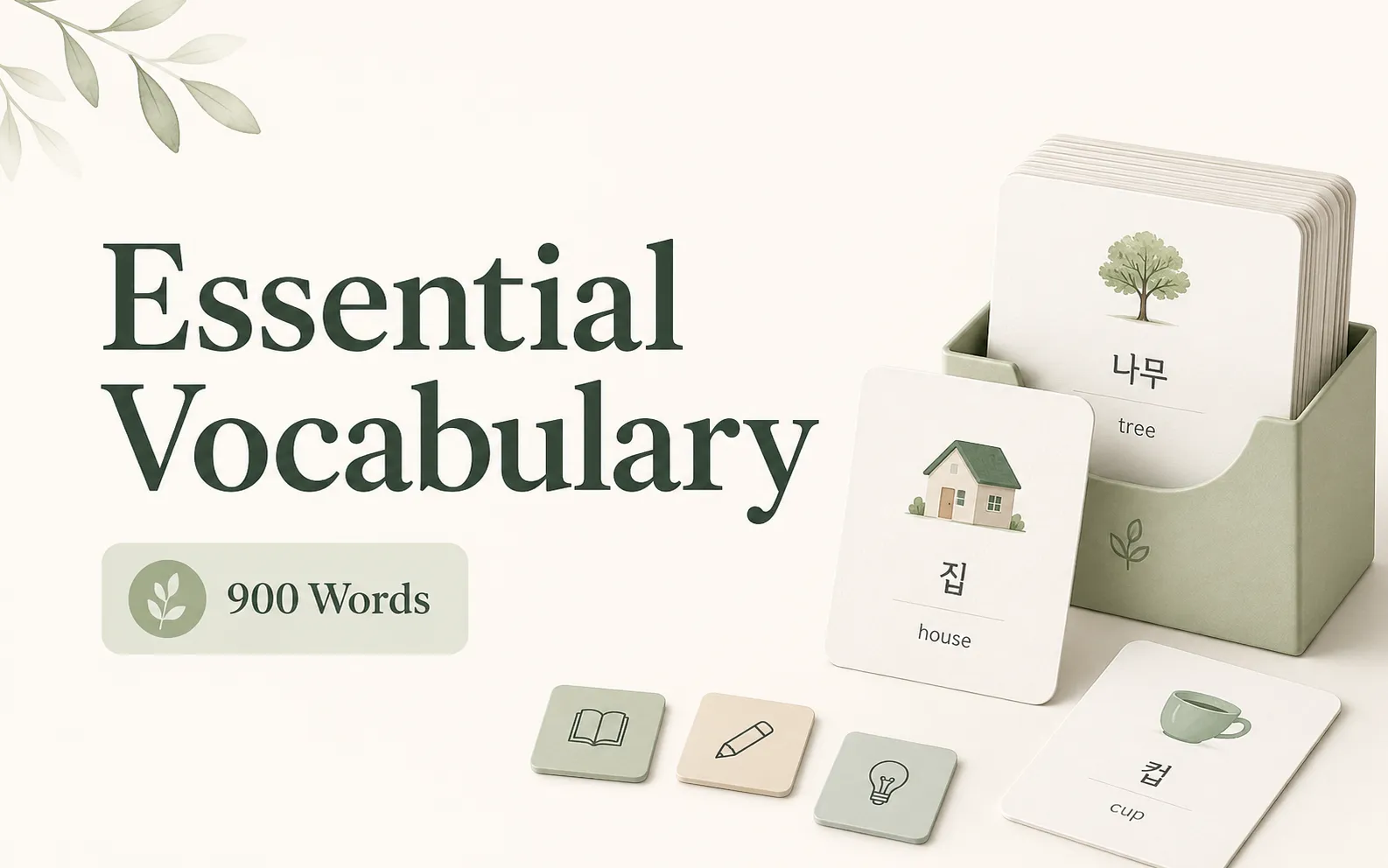
LV2
Essential Vocabulary
Build about 900 high-frequency words and patterns in a 45-day routine. Study one small set a day alongside any main course.
Building short sentences and essential vocabulary
02
Sentence foundations
Particles, polite speech, and how Korean sentences work
- Understand basic word order and particles
- Switch between polite and casual speech
- Build clearer everyday sentences
LV3
Basic Grammar
See how Korean sentences are built: word order, core particles, polite and casual speech, and basic tense. This course turns known words into sentences you can make yourself.
Making sentences with basic grammar and conjugation
LV3
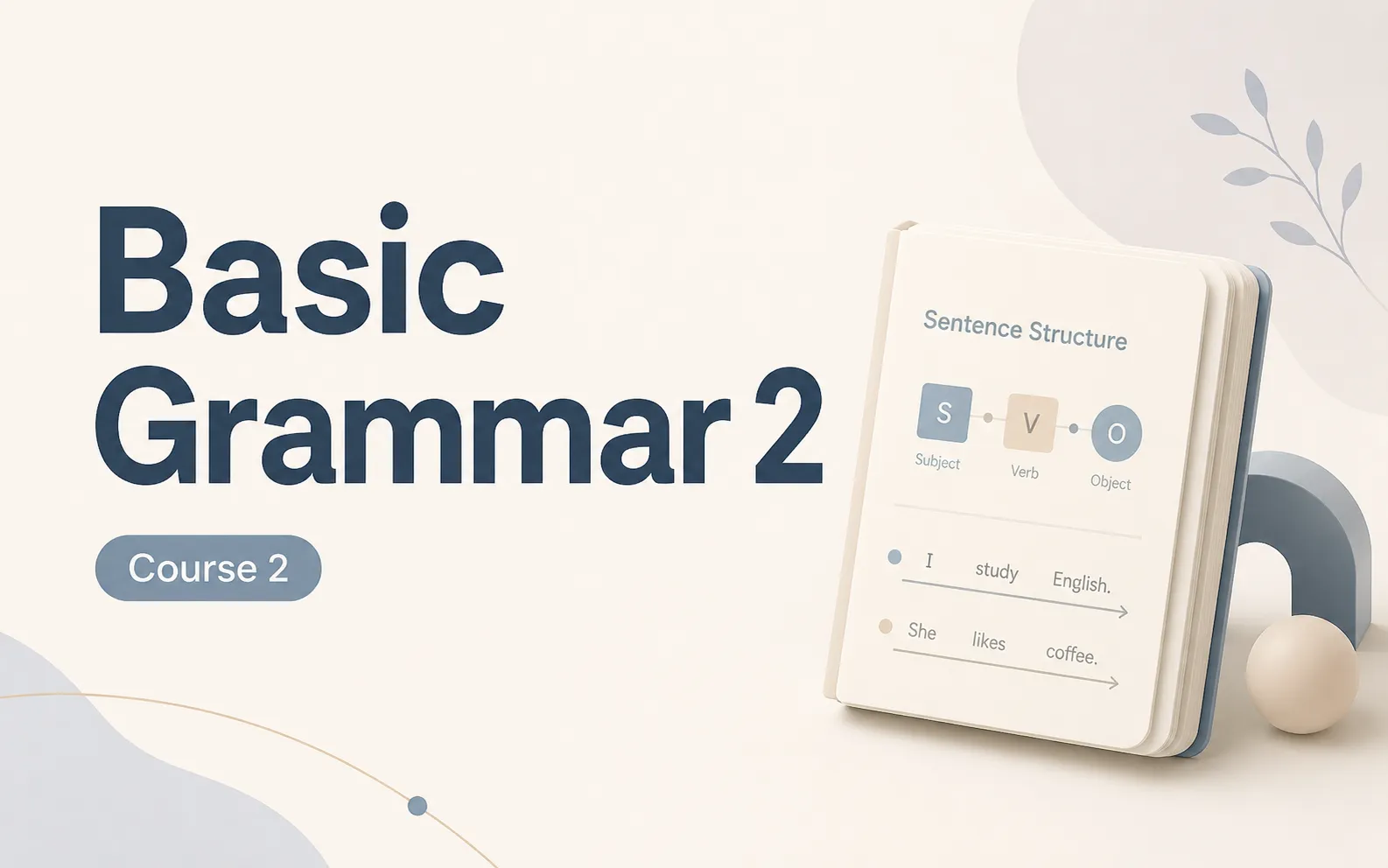
Basic Grammar 2
Move beyond basic statements into questions, requests, suggestions, honorifics, adverbs, and clause building. You’ll learn to express intention, experience, and more precise meaning.
Making sentences with basic grammar and conjugation
03
Forms & connections
Conjugation, tense, and joining short ideas
- Conjugate regular and common irregular verbs
- Choose present, past, and progressive more naturally
- Connect two short ideas into one sentence
LV3
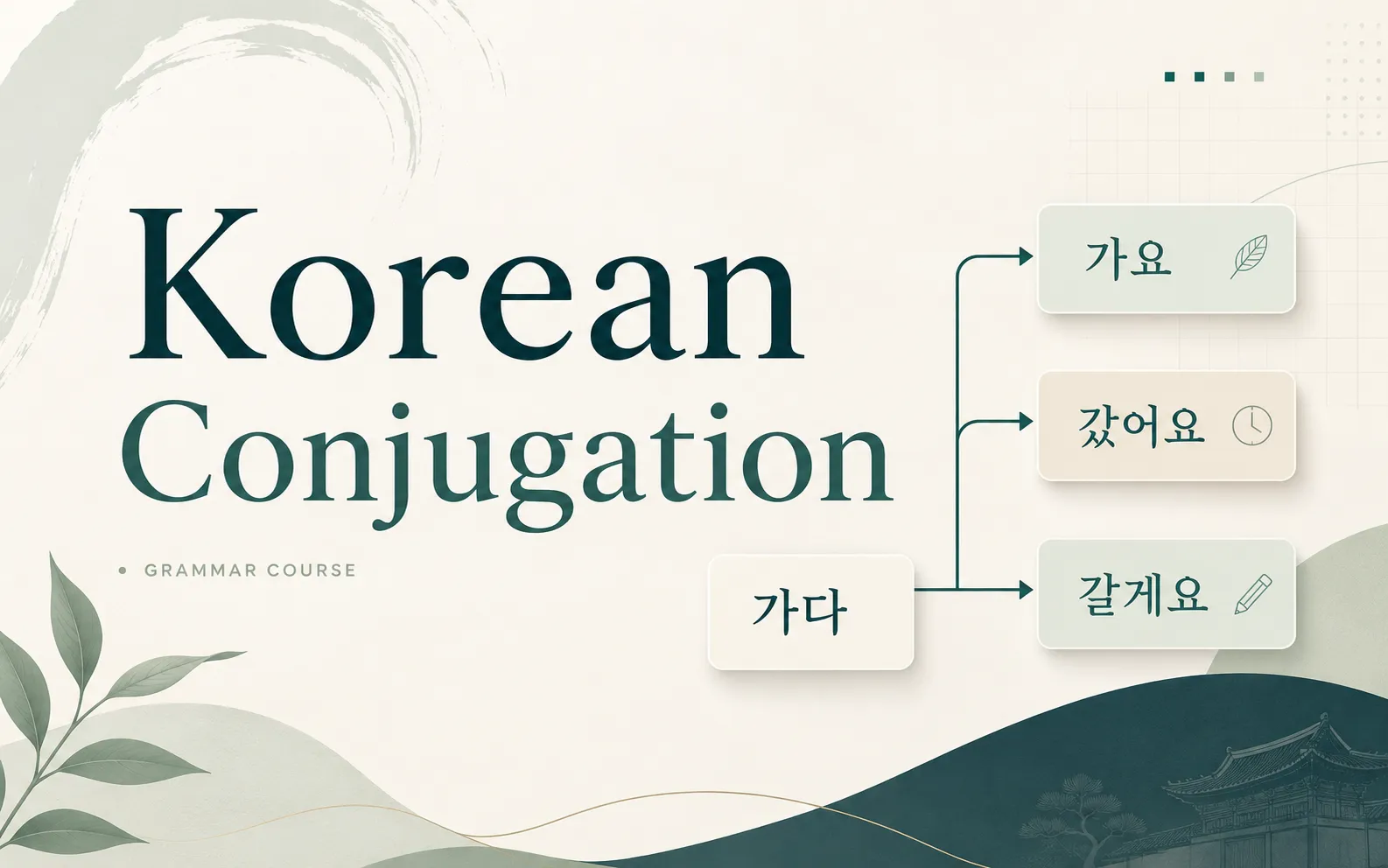
Korean Conjugation Rules
Learn why verb and adjective forms change by following stem-and-ending patterns. You’ll handle contractions, ㅡ deletion, tense endings, and unfamiliar regular words without guessing.
Making sentences with basic grammar and conjugation
LV3
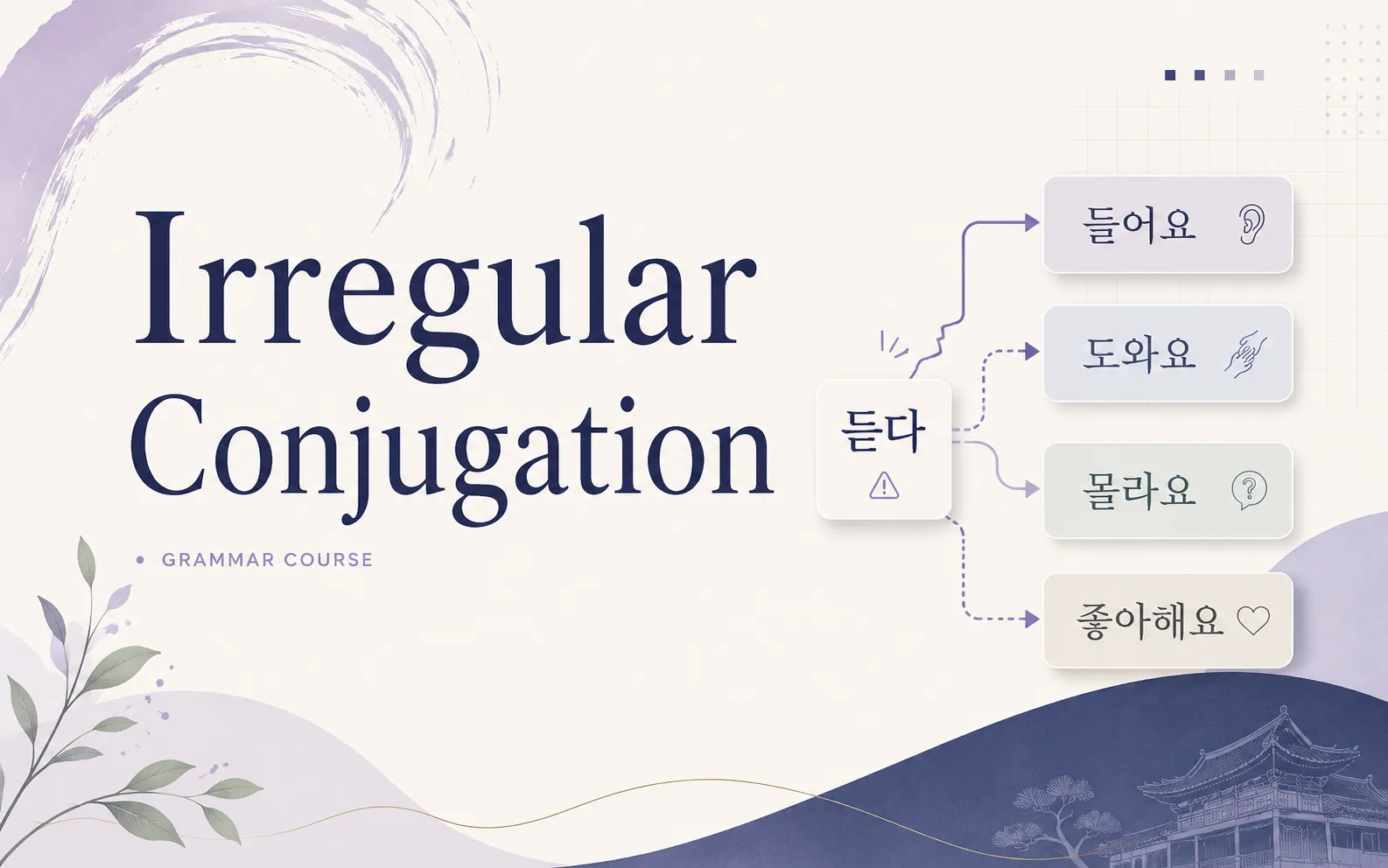
Korean Irregular Conjugation
Compare the ㄷ, ㅂ, ㅅ, 르, ㅎ, and ㄹ irregulars and learn when they change—and when they do not. The side-by-side practice makes exceptions predictable.
Making sentences with basic grammar and conjugation
LV3
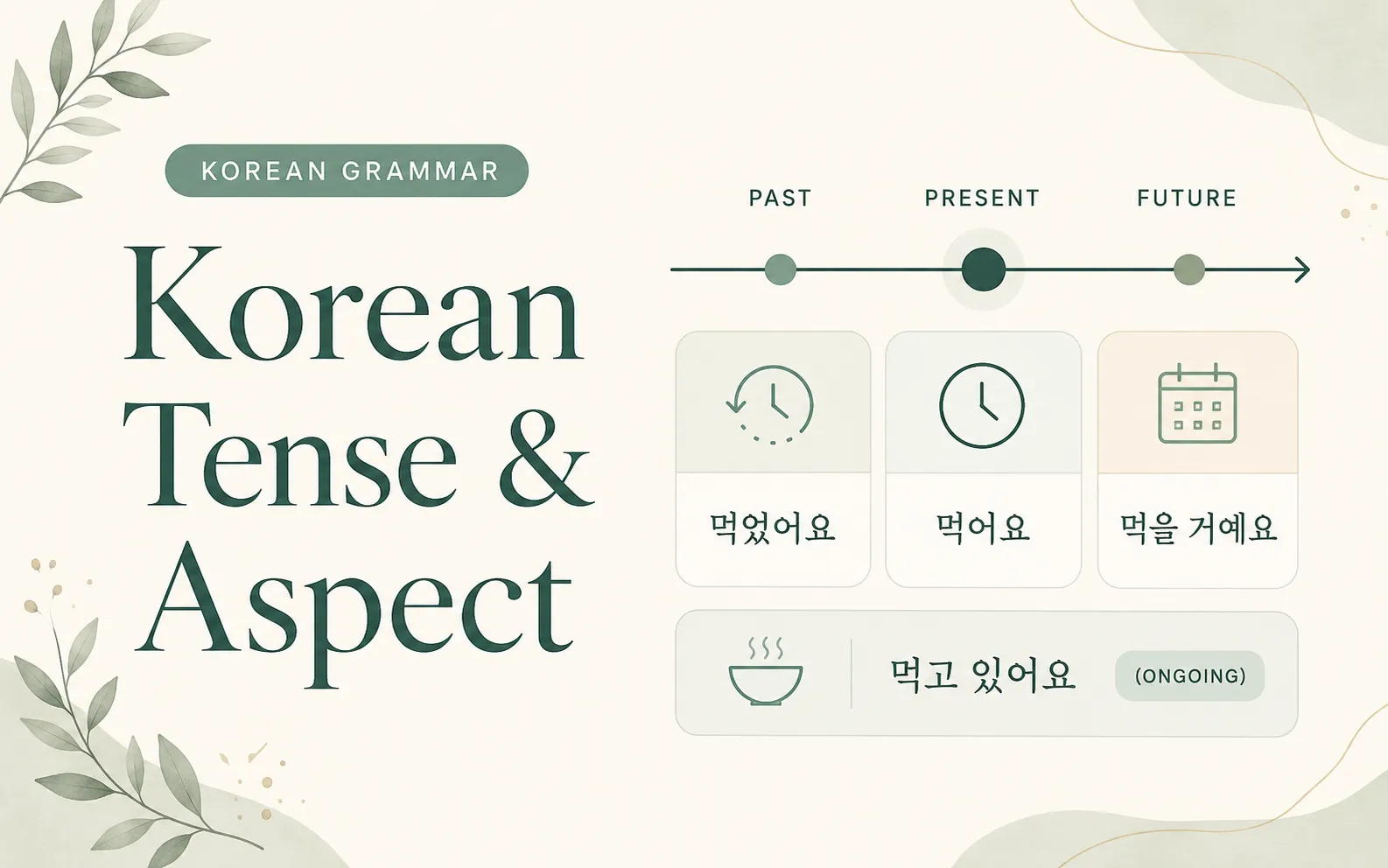
Korean Tense & Aspect
Compare present, past, future, progressive, completed states, experience, plans, and intentions on one timeline. You’ll choose forms by meaning, not translation alone.
Making sentences with basic grammar and conjugation
LV4
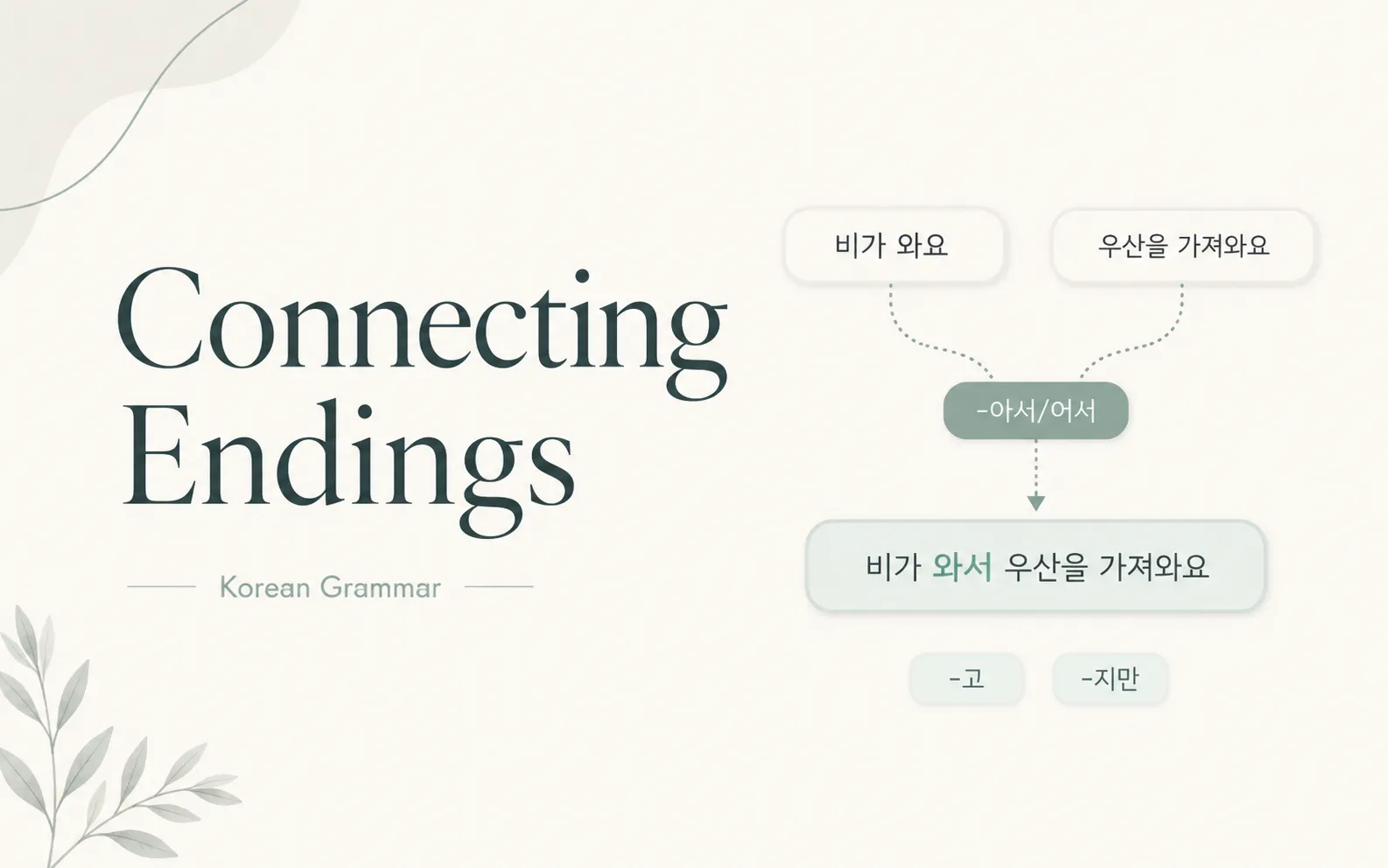
Korean Connecting Endings
Join clauses with -고, -아/어서, -(으)니까, -지만, -는데, and conditional endings. Learn the difference between similar connectors so longer sentences stay clear.
Connecting ideas and opening beginner conversation
LV4
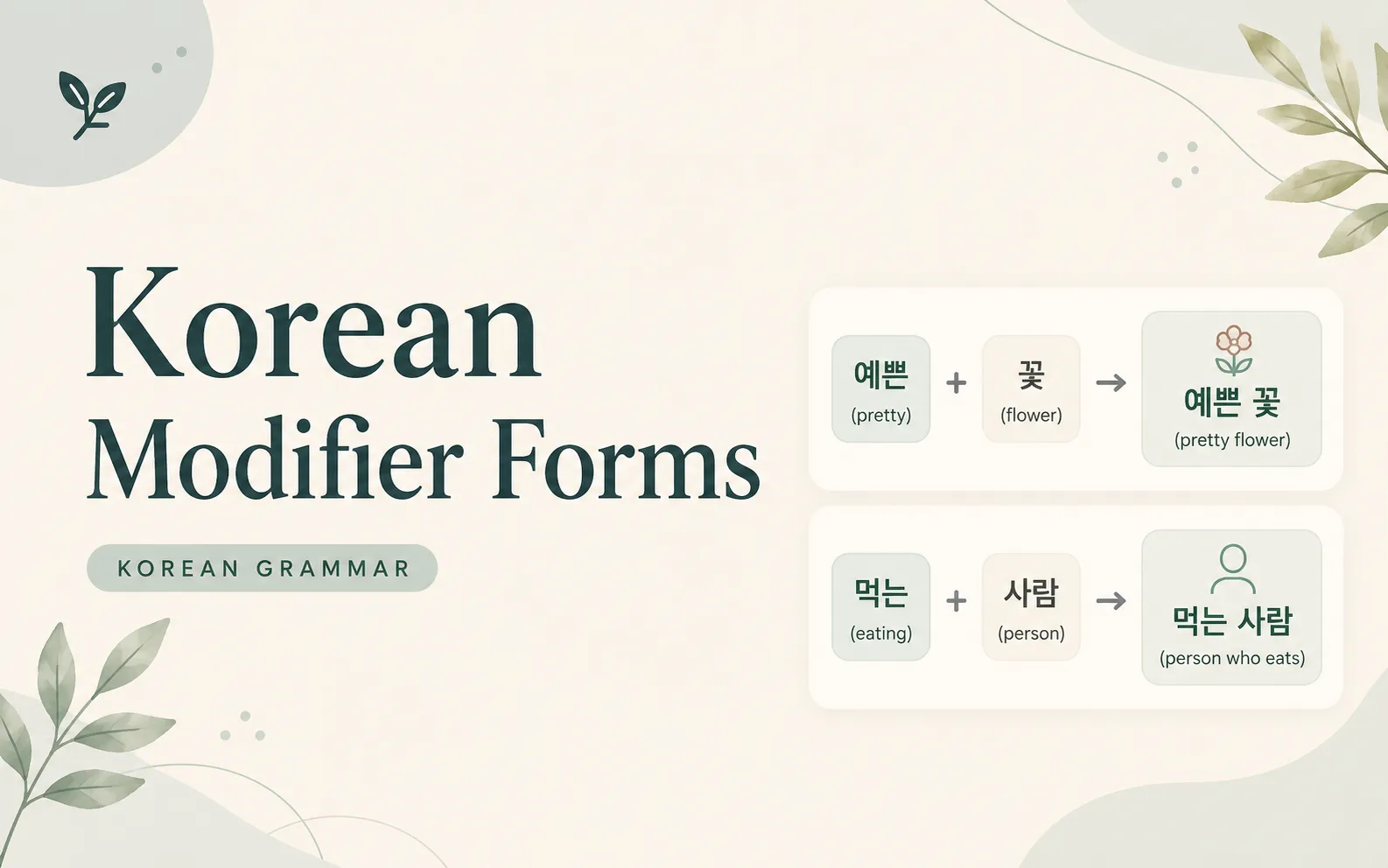
Korean Modifier Forms
Use -는, -(으)ㄴ, and -(으)ㄹ before nouns to say things like “the book I’m reading” or “the person I met.” Build richer noun phrases for speaking and reading.
Connecting ideas and opening beginner conversation
04
Beginner conversation
Open everyday conversations with confidence
- Handle greetings, plans, and simple reasons
- Follow beginner dialogues more comfortably
- Start speaking along with short scenes
LV4
Beginner1
Practice the building blocks of daily talk: introductions, locations, current and past actions, time, quantities, comparisons, and simple reasons—all inside short dialogues.
Connecting ideas and opening beginner conversation
LV4
Beginner 2
Handle fuller beginner conversations about plans, changes, feelings, suggestions, conditions, and reported speech. Grammar you have studied begins to work together in real situations.
Connecting ideas and opening beginner conversation
MAP 02
Intermediate
LV4–5
01
Intermediate conversation
Say more complex thoughts more smoothly
- Explain reasons, plans, and comparisons
- Sound more natural in longer dialogues
- Handle everyday intermediate situations
LV5
Intermediate 1
Learn to explain plans, ability, sequence, uncertain reasons, observations, obligations, and purpose in longer dialogue. Focus on connecting thoughts without sounding translated.
Growing intermediate conversation and patterns
LV5
Intermediate 2
Work with comparison, dependence, conditions, emphasis, indirect questions, and nuanced reasons. These dialogues train you to qualify what you mean instead of making only direct statements.
Growing intermediate conversation and patterns
02
Grow your expressions
Pick the pattern themes you need right now
- Reuse ready-made frames for real situations
- Sound less textbook, more spoken
- Choose themes instead of forcing order 1→10
LV4
1. Solutions & Suggestions
Build a practical toolkit for suggesting, advising, offering help, asking favors, and stating what must be done. Choose this theme when you want conversations to lead to action.
Connecting ideas and opening beginner conversation
LV4
2. Intentions & Excuses
Express purpose, intention, concern, reasons, unexpected causes, and gentle excuses. You’ll learn several ways to answer the everyday question “why?” with the right tone.
Connecting ideas and opening beginner conversation
LV4
3. Guessing & Gossip
Talk about what seems true, what you heard, rumors, likelihood, and what is obvious. This theme helps you speak when the information is not entirely your own or certain.
Connecting ideas and opening beginner conversation
LV5
4. Logic & Connections
Connect ideas through contrast, cause, condition, timing, sequence, and “the more…the more.” Use this theme to make the logic between sentences easy to follow.
Growing intermediate conversation and patterns
LV5
6. Habits & Experience
Describe experience, past habits, hesitation, ongoing states, repeated behavior, and realizations after doing something. This theme is useful for telling personal stories.
Growing intermediate conversation and patterns
03
Read with stories
Use supported e-books as light input beside your main course
- Choose any story that interests you—there is no fixed order
- Read or listen to one or two episodes a week
- Follow the story without needing to understand every word

MAP 03
Advanced
LV6
01
Advanced conversation
Nuance, emotion, and more complex talk
- Talk about values, complaints, and recommendations
- Express finer emotion and stance
- Stay confident in advanced everyday scenes
LV6
Advanced 1
Discuss values, rumors, relationships, complaints, recommendations, and strong choices with advanced everyday patterns. Learn to express stance as well as information.
Advanced conversation and nuance
LV6
Advanced 2
Practice formal reasons, hypothetical choices, realizations, recalled events, natural rules, and “as long as” conditions. The goal is to manage layered thoughts in one conversation.
Advanced conversation and nuance
02
Deeper patterns
Emphasis, emotion, exaggeration, and quoting
- Add nuance without long grammar lectures
- Report what others said more naturally
- Match strong feelings to the right frame
LV6
5. Emotions & Attitudes
Express frustration, sympathy, resignation, disagreement, and strong reactions without relying on a single adjective. Learn the frames Koreans use to reveal attitude.
Advanced conversation and nuance
LV6
7. Emphasis & Nuance
Add surprise, realization, insistence, assumption, certainty, and subtle emphasis to plain statements. Practice the small endings that make spoken Korean sound alive.
Advanced conversation and nuance
LV6
8. Comparison & Passive
Compare alternatives, contrast differences, and describe making, allowing, receiving, or suffering an action. The course also covers ease, difficulty, blame, and “despite.”
Advanced conversation and nuance
LV6
9. Exaggeration & Lament
Turn up intensity with expressions for limits, near misses, repetition, completion, excess, and dramatic complaint. Use these patterns when neutral Korean feels too flat.
Advanced conversation and nuance
LV6
10. Quoting & Recall
Report suggestions, questions, commands, requests, and promises, then extend them into recall and formal purpose. This theme helps you carry another person’s words into your own story.
Advanced conversation and nuance